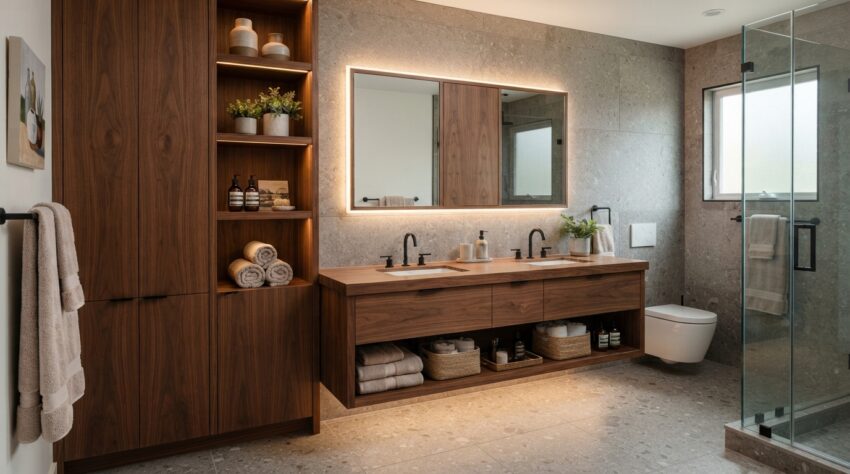
Kitchen and bathroom cabinetry is one of the few home features that gets touched every single day, which is why homeowners tend to spend more time researching it than almost any other renovation decision. Between material choices, construction grades, and layout options, the process can feel overwhelming fast. For homeowners weighing custom cabinets in Yakima, WA against stock or semi-custom alternatives, understanding the practical differences makes the decision a lot easier.
Understanding Custom Cabinetry
Custom cabinetry is built to the exact dimensions of a kitchen or bathroom, rather than assembled from pre-set modular sizes. That means every drawer, corner unit, and appliance gap is measured and constructed for the specific space, not adjusted to fit it after the fact. Nationally, custom cabinets have been gaining ground: industry tracking shows the custom segment grew from roughly 20% of cabinet sales in 2022 to about 25% by mid-2024, even as mass-produced lines saw sales dip during the same stretch.
Custom vs. Semi-Custom vs. Stock
The three categories get used interchangeably by a lot of homeowners, but they represent very different products.
- Stock cabinets: pre-manufactured in standard sizes (typically 3-inch increments), lowest cost, fastest to obtain, limited configuration options.
- Semi-custom cabinets: built from a base framework with modified sizing, finishes, and interior storage features. This category currently holds the largest share of the national market, close to 38% to 46% depending on the reporting source.
- Custom cabinets: built entirely to specification with full control over wood species, joinery, hardware, and dimensions. Smallest share of the market by volume, but the segment homeowners choose when standard layouts won’t work or when long-term durability matters more than upfront price.
Kitchens with irregular angles, older homes with non-standard ceiling heights, or additions built onto an existing structure are common reasons Yakima homeowners end up needing custom work instead of an off-the-shelf configuration.
Materials, Costs, and Regional Considerations
Wood Selection and Construction
Solid wood remains the dominant material in the cabinet industry, accounting for roughly 72% of material share as of 2025. Maple, oak, cherry, and alder are common choices in the Pacific Northwest, partly because of proximity to regional timber supply. Plywood box construction with solid wood door fronts is generally considered more stable over time than particleboard, especially in climates with seasonal humidity swings. Yakima’s dry summers and cold winters create exactly that kind of swing, which is one reason local installers often steer homeowners toward kiln-dried hardwoods and moisture-resistant box materials rather than budget composite options.
Typical Investment Ranges
National renovation data gives a useful benchmark, even though local pricing varies by contractor and material choice. According to the 2025 U.S. Houzz & Home Study, the median kitchen renovation budget nationally sits around $22,000, with primary bathroom remodels averaging closer to $13,000. Cabinetry alone typically represents somewhere between 25% and 40% of a full kitchen remodel budget, depending on how much of the layout changes.
| Project Type | National Median Budget (2025) | Typical Cabinet Share |
|---|---|---|
| Full Kitchen Remodel | $22,000 | 25%–40% |
| Primary Bathroom Remodel | $13,000 | 20%–30% |
| Guest Bathroom Remodel | $6,000 | 15%–25% |
Yakima’s cost of living index sits close to the national average (95.7 as of late 2024, according to city-data compilations of Census figures), which means these national benchmarks tend to translate fairly closely to local pricing rather than skewing significantly higher or lower.
Hardware and Finish Costs
Hardware gets treated as an afterthought in a lot of budgets, but it adds up faster than most homeowners expect. Soft-close hinges typically run a few dollars more per door than standard hinges, while full-extension soft-close drawer slides can add noticeably more per drawer box depending on weight capacity. Finish selection matters too. A stained natural wood finish generally costs less than a multi-step painted finish, since painted cabinetry requires additional prep, primer, and topcoat stages to avoid visible brush or spray lines.
Glass-front upper cabinets, interior lighting, and specialty storage inserts (spice pull-outs, appliance garages, tray dividers) are usually priced as line-item upgrades rather than folded into a base linear-foot quote. Getting an itemized breakdown instead of a single lump-sum number makes it much easier to see where a budget is actually going.
Working With a Cabinet Builder
The Measuring and Design Process
A custom order typically starts with an in-person measurement of the space, including wall angles, floor levelness, and the location of plumbing, electrical, and HVAC elements that the cabinetry needs to work around. From there, most builders produce a design layout, sometimes rendered digitally, before any material is cut. This stage is where changes are cheapest to make. Once cabinet boxes are built, adjusting a layout gets significantly more expensive and time-consuming.
Homeowners should expect at least one revision round built into the process. A builder who moves straight from a single conversation to a final quote without a measured site visit is worth double-checking, since accurate dimensions are the foundation of a custom order actually fitting once installed.
Lead Times and Scheduling
Made-to-order cabinetry generally takes longer to produce than stock or semi-custom lines. Industry figures put average production time for made-to-order cabinetry at around 25 days, compared to four to seven days for ready-to-assemble stock lines. That gap widens further when a project involves specialty wood species, custom finishes, or a builder with a full order backlog. Planning a renovation timeline around the stock-cabinet number is one of the more common scheduling mistakes homeowners make.
Design and Sustainability Trends
A few shifts are showing up consistently in remodeling data and among Pacific Northwest homeowners specifically. Frameless (also called “European-style”) cabinet construction continues to gain share because it maximizes interior storage without changing the exterior footprint. Soft-close hinges and drawer slides have moved from a premium upgrade to something close to a baseline expectation in new installations.
- Two-tone cabinetry, pairing a darker island with lighter perimeter cabinets
- Full-height upper cabinets that eliminate the awkward gap above standard-height uppers
- Drawer-based lower cabinetry instead of traditional swinging doors, for easier access to cookware
- FSC-certified or low-VOC finished wood, driven by buyer demand for lower-emission materials
Regulatory pressure is part of this shift too. CARB and TSCA Title VI emissions standards for composite wood products are now standard compliance requirements across the cabinet manufacturing industry, not optional certifications, which has pushed more manufacturers toward low-formaldehyde adhesives industry-wide.
Skilled labor availability is worth factoring into project timelines. A majority of kitchen and bath firms reported moderate to severe labor shortages in 2025, according to industry tracking from Mordor Intelligence, and that shortage tends to stretch lead times most for made-to-order and custom cabinetry, where every piece is built individually rather than pulled from inventory. Homeowners planning a custom cabinet project should generally expect longer lead times than a stock or semi-custom order, often by several weeks.
Maintenance That Extends Cabinet Life
Custom cabinetry represents a bigger upfront investment than stock options, so care habits matter more over the life of the product. Wood cabinetry, especially near sinks, dishwashers, and stoves, is exposed to repeated moisture and temperature changes that gradually affect finish and joinery if ignored.
Everyday Care Habits
- Wipe spills near sinks and dishwashers promptly rather than letting water sit against wood surfaces
- Use a mild, non-abrasive cleaner rather than harsh degreasers, which can strip finish over repeated use
- Check hinge and slide hardware annually and tighten screws that loosen from regular use
- Avoid mounting anything heavy on cabinet doors, since hinges are rated for the door weight, not additional load
Humidity control matters too. Running a kitchen exhaust fan during cooking, and a bathroom fan during and after showers, reduces the moisture load that cabinetry near those areas absorbs over time. In a climate like Yakima’s, where indoor heating runs for a good portion of the year, indoor humidity swings between seasons can be significant, and that swing is part of what causes wood joints to expand and contract if the cabinetry wasn’t built with kiln-dried material to begin with.
When Refinishing Beats Replacement
Not every aging cabinet set needs full replacement. If the box construction is solid, sound joinery, no water damage to the base material, refinishing or repainting the door fronts can update the look at a fraction of the cost of a full custom rebuild. This is generally only a viable option with solid wood doors rather than thermofoil or laminate fronts, since those materials don’t accept refinishing the same way. A contractor assessing an older kitchen can usually tell within a short inspection whether the existing boxes are worth keeping.
Budgeting Beyond the Cabinets Themselves
Cabinetry rarely gets installed in isolation. Countertops, backsplash tile, plumbing fixtures, and sometimes flooring all shift when a kitchen or bathroom layout changes, and those costs need to sit in the same budget conversation from the start. The national countertop industry alone represents a $7.4 billion market, according to Freedonia Group research, which gives a sense of just how significant that line item can be relative to cabinetry cost. Homeowners who price cabinets first and treat everything else as an afterthought tend to run over budget more often than those who plan the full scope up front, including demolition, disposal, and any electrical or plumbing rework the new layout requires.
Final Thoughts
Custom cabinetry costs more upfront than stock alternatives, but it solves layout and durability problems that pre-built options often can’t. Homeowners comparing options in Yakima are best served by getting multiple measured quotes early, since lead times for made-to-order cabinetry tend to run longer than for stock products.